I'll be using this space for updates, notes of interest and other things that catch my interest, that I feel may catch your interest too!  Spend some time looking around the page, and sign up for an email list.  You can get market updates, search for homes around Boerne, Fair Oaks Ranch and the San Antonio metro.  Let me know if I can do something for you anytime.  Just call or text me at 210-478-8555 or feel free to email me!  

Sept. 22, 2026

3 Things You Can Actually Control About Your Boerne Mortgage Rate Right Now


If you're trying to buy a home in Boerne or Fair Oaks Ranch, affordability is probably what's on your mind. And as mortgage rates tick up again, it's fair to wonder if you should just hit pause and wait for them to come back down.

For now, though, they're headed the other way. Mortgage News Daily data shows how rates have risen this year (see graph below):
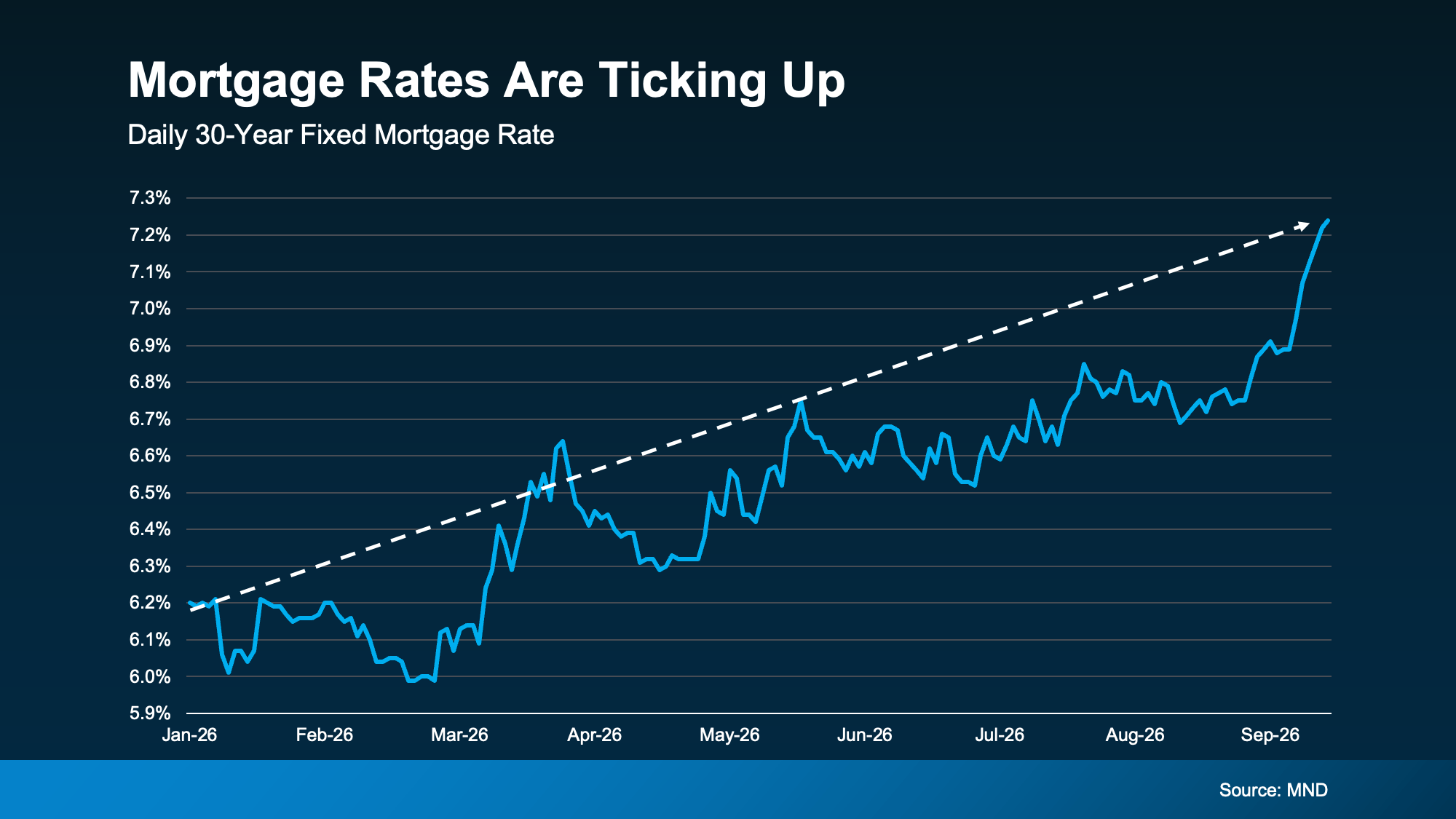
a graph of a moving rate

Why? Mortgage rates track a lot of things well outside our market — overseas conditions, inflation data, oil prices, and decisions from the Federal Reserve, which recently raised its own benchmark rate. Danielle Hale, Chief Economist at Realtor.com, has said the upward pressure on rates was already building before that Fed move, and doesn't look like it's letting up soon.

Now, that's probably not what you wanted to hear. But it doesn't mean there's nothing you can do. You can't control where rates go from here, but you can control several things that shape the rate you actually get — and that matters just as much whether you're looking in Fair Oaks Ranch, near downtown Boerne, or out toward the Hill Country's newer communities.

So where should you focus? Let's walk through it.

Work on Your Credit Score

Your credit score plays a big role in the rate you qualify for, and even a small improvement can make a real difference in your monthly payment. Freddie Mac puts it simply: a higher credit score generally opens the door to better loan terms and a lower rate.

So make sure you're doing what you can to keep your score up before you start house hunting in the 78006 or 78015 zip codes. If you're not sure where your score stands, or how to improve it, talk to a trusted local loan officer before you go under contract, not after.

Explore Your Loan Options

The type and term of your loan both affect your rate. Conventional, FHA, VA, and USDA loans each come with their own requirements and rates, and your term — 15, 20, or 30 years — changes both your payment and the total interest you'll pay. The structure matters too: a fixed-rate loan holds steady over time, while an adjustable-rate loan usually starts lower and can move later on. Bankrate explains that fixed rates tend to run higher than introductory adjustable rates because the lender is taking on more long-term risk, while government-backed FHA, VA, and USDA loans sometimes come in lower since they carry a government guarantee that reduces the lender's exposure.

It's worth exploring your options with a lender who knows this market before you decide. Just balance your goals, your likely rate, and any tradeoffs — and it's not a bad idea to talk to more than one lender to see how the options compare.

Consider a Newly Built Home

Another path to a lower rate comes down to the kind of home you buy. Many builders are buying down mortgage rates as an incentive, which lowers your monthly payment. It's one way they're working to get their homes sold.

According to Realtor.com, buyers of newly built homes nationally landed a lower average rate last quarter than buyers of existing homes (see graph below):
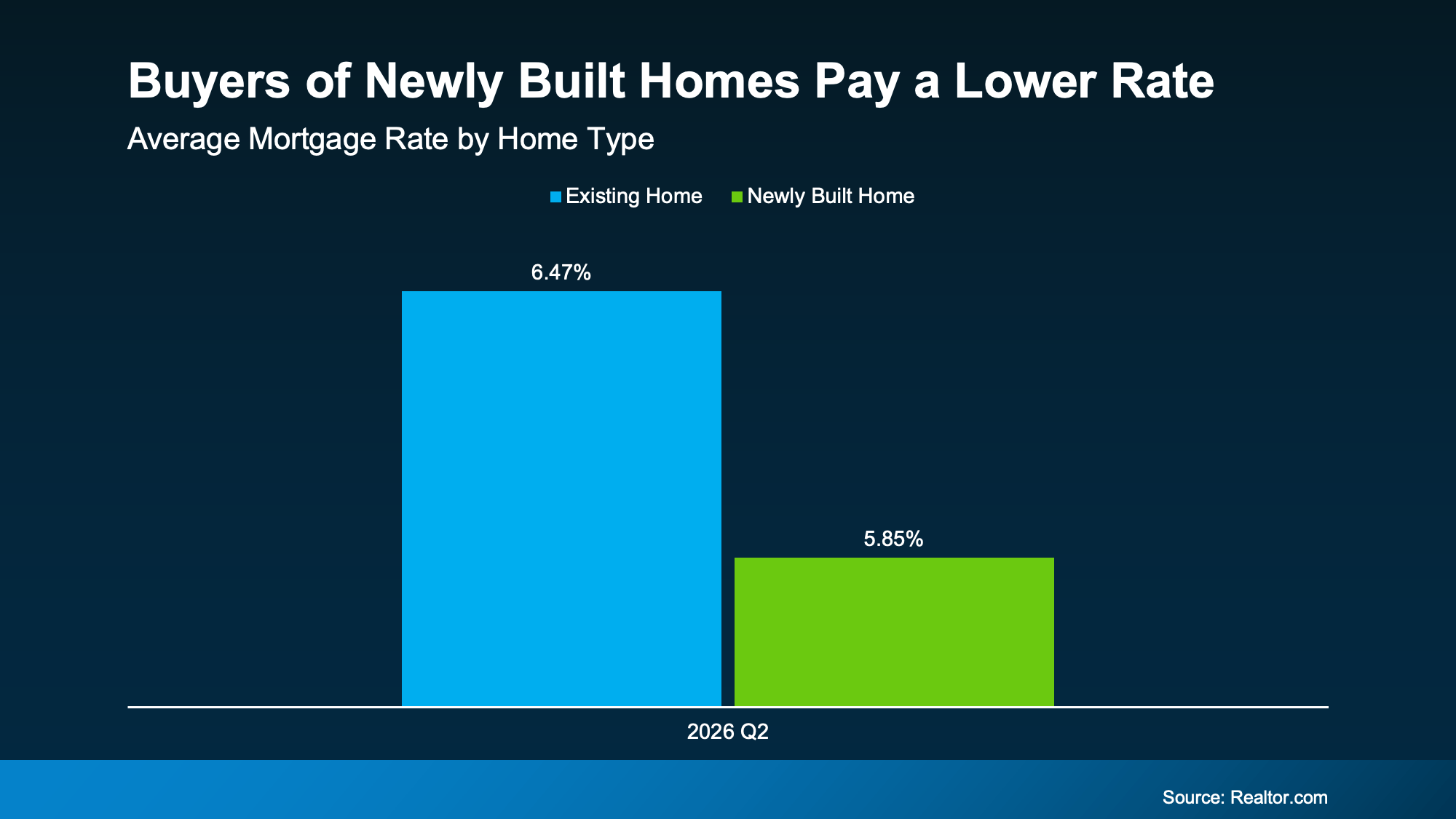
a graph of a graph showing a number of houses

We're seeing the same trend show up locally, with a number of Hill Country builders offering rate buydowns and closing cost incentives in communities like Cordillera Ranch, Esperanza, and Tapatio Springs. If a lower rate is your goal, it's worth asking your agent to walk you through which new-construction communities are currently offering this kind of incentive.

Bottom Line

You can't control where mortgage rates go, but you can control your credit, your loan, and the kind of home you buy. Working with a trusted local lender can help you lock in the best rate you qualify for in Boerne or Fair Oaks Ranch. And when you're ready to make a move that fits your budget, let's connect.

Sept. 18, 2026

Still waiting for rates to come down before buying in Boerne?

When housing affordability gets tight in places like Boerne and Fair Oaks Ranch, waiting for mortgage rates to drop can feel like the safest move. But nationwide, 41% of home buyers who waited actually wish they’d bought sooner.

Here in Kendall and Bexar counties, waiting on rates carries a double risk:

  1. Unpredictable Mortgage Rates: Inflation, economic shifts, and global events drive rate fluctuations—and they could just as easily nudge rates upward.
  2. Local Price Appreciation: Demand for Hill Country living remains strong. Even a modest dip in rates typically brings a wave of waiting buyers back into the market, driving up home prices and sparking multiple-offer scenarios in popular neighborhoods across 78006 and 78015.
If you're weighing your options, you don’t have to rush into a purchase—move only when the numbers make sense for your budget. But sitting on the sidelines without a plan could mean paying more for the same property down the road.

Before you decide to pause your search, connect with a trusted local lender and real estate professional to review current inventory, builder incentives, and alternative financing options so you can make a decision based on real local data.
Sept. 15, 2026

Selling This Fall in Boerne or Fair Oaks Ranch? You Haven't Missed Your Window


Summer's winding down, and if you've been thinking about selling your home in Boerne, Fair Oaks Ranch, or one of the surrounding Hill Country communities, you might be wondering if you missed your chance. Better to wait until next year or even next spring, right?

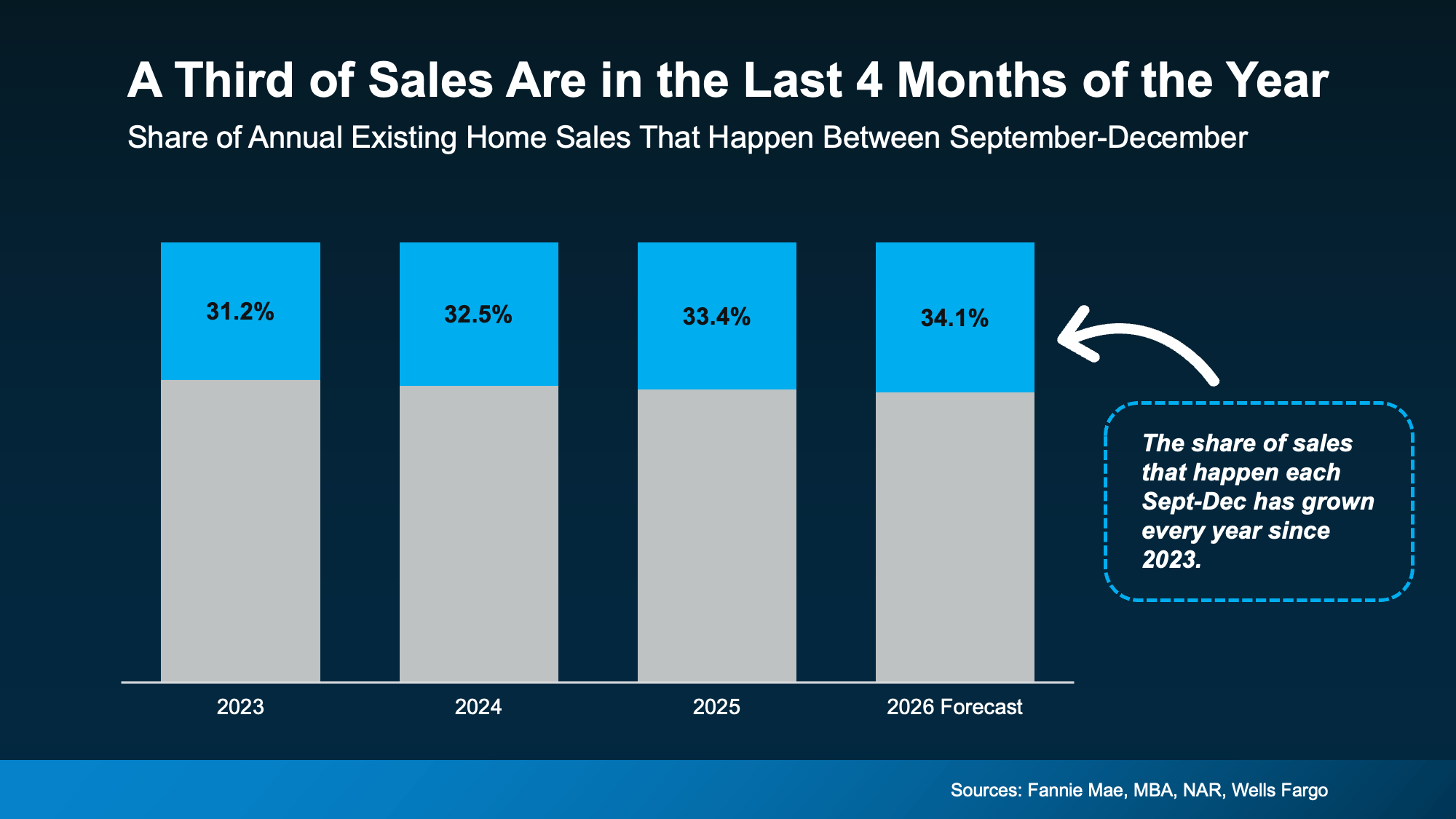
Not so fast. About one in three of all home sales happen in the last four months of the year — and that includes plenty of activity right here in the 78006 and 78015 zip codes.

Fall Is Busier than You Think

Data from the National Association of Realtors (NAR) shows around a third of existing home sales happen in the final four months of the year. And that share has grown every year since 2023 (see graph below):

a graph of sales

Here's What That Means for You

According to forecasts from Fannie Mae, the Mortgage Bankers Association (MBA), NAR, and Wells Fargo, there will be about 4.16 million existing home sales this year. Based on how many sales have happened so far, that means roughly 1.4 million sales are expected between now and December.

That's about 11,800 houses selling every single day this fall — and Boerne and Fair Oaks Ranch buyers are part of that demand, especially with the area's continued population growth drawing people to communities like Cordillera Ranch, Esperanza, Tapatio Springs, River Crossing, and Champion Heights.

So, the market isn't frozen and you don't need to put your plans on ice either. Yes, higher rates are keeping some buyers on the sidelines. But hold out for next spring, and you'll sit out months when other serious buyers are ready to move before the new year.

How do you get in front of those buyers who are still out there looking right now? Getting your house sold this season comes down to how well it's priced and presented, and that's where a local agent shines.

A good agent knows what buyers in Boerne and Fair Oaks Ranch want right now, prices your house to match this fall's market, and positions it to stand out to the serious buyers shopping before year-end. From the first photo to the final offer, they handle the details that turn your house on the market into one of the 11,800 selling every day.

Bottom Line

Listing this fall doesn't mean your house will sit on the market until spring. Buyers are out there right now, in Boerne and Fair Oaks Ranch too, ready to make a move before the new year – and your window is still open.

Let's connect and make yours one of the homes that sells this season.

Charley Wasson is a full-time REALTOR® with Sunflower Real Estate specializing in Boerne, Fair Oaks Ranch, and the greater Texas Hill Country — with over 300 documented MLS transactions and more than $121 million in closed sales. Named a four-time Platinum Top 50 San Antonio REALTOR®, Charley combines nearly a decade of full-time real estate experience with a prior career as a Regional Sales Manager for one of San Antonio's largest home builders.

Sept. 12, 2026

Data Centers Are Moving Closer to Homes. What Does That Mean for You?


Data centers probably weren't on your list of things to think about when buying or selling a home.

School districts? Sure. How close you are to family? Absolutely. A large building full of computer servers down the road? Probably not.

But that may be changing.

Data centers are popping up in more communities across the country. And as they do, buyers and homeowners are starting to wonder what having one nearby could mean for everything from home values to utility bills. So, let's get into what the data actually says. Because there's a lot more nuance here than if they’re “good” or “bad.”

Data Centers Are Showing Up in a Lot More ZIP Codes

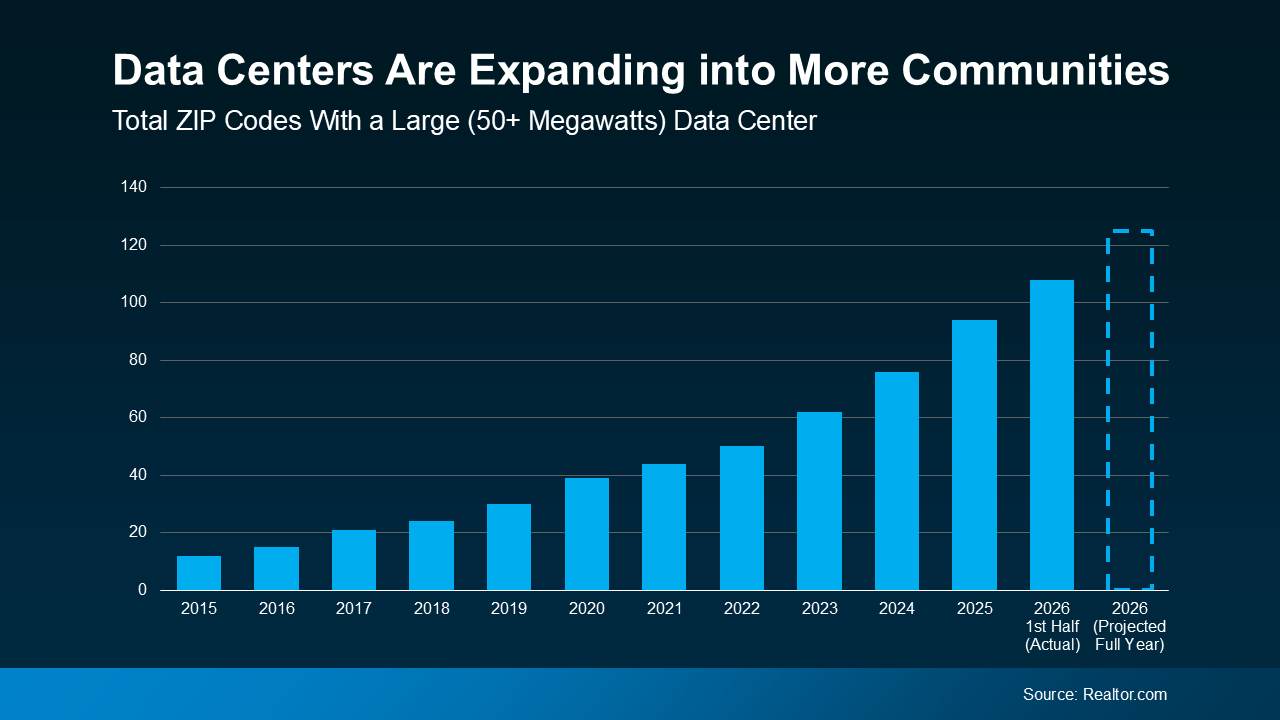
According to Realtor.com, back in 2015, only about a dozen ZIP codes had a large data center. But by the first half of 2026, that number had climbed to more than 100 – and it's projected to rise even further by the end of the year (see graph below):

a graph of growth in blueThat's a pretty dramatic increase in just over a decade. HousingWire shows a lot of that growth is in Texas, Virginia, Georgia, Pennsylvania, Ohio, Utah, Illinois, Arizona, Indiana, and Nevada. 

And that ramp up explains why this is becoming a real estate conversation. More buyers are going to encounter a data center during their search. More homeowners are going to hear about one being proposed nearby. 

And both groups are going to want to know what that could mean for them.

The Big Question: What About Home Values?

One of the first concerns homeowners and buyers may have is: could a nearby data center hurt home values? So far, there’s no evidence that says it automatically will.

Researchers compared communities that have large data centers to similar communities without them. A recent HousingWire article reports:

“. . . home values in data center ZIP codes generally tracked their matched communities — with no statistically meaningful gains or losses. Listing prices showed a modest initial increase around openings . . .”

That's important context. Historically, simply having a data center nearby hasn’t been enough to send home values dramatically higher or lower.

That doesn’t mean every property will react the same way. Proximity, the surrounding development, and the specific facility can all matter. But for the typical homeowner or buyer, the data so far doesn’t point to an automatic impact on home values.

Living Near a Data Center Can Come with Tradeoffs

Like any major development coming to town, data centers can bring benefits along with things buyers and homeowners will want to consider.

On the plus side:

  • They may be part of a bigger growth story. A data center can usher in broader development in an area and substantial property tax revenue that can be used to improve the community. 

  • Infrastructure may get an upgrade. New roads, fiber, power infrastructure, and other improvements can come along with major development. 

  • They can generate economic activity. A data center can generate jobs which in turn fuels local housing demand and supports local businesses. 

On the flip side:

  • They're not exactly invisible. Large facilities, transmission lines, substations, and construction can change the look and feel of an area. 

  • Noise can matter. Cooling equipment, generators, construction, and truck traffic may be noticeable depending on how close you are. 

  • They use more resources. These facilities can require significant electricity and, depending on the cooling system, water. That can raise questions about local infrastructure and whether growing electricity demand could affect what residents pay. 

On that last point, J.P. Blackwood, Public Affairs Liaison and Media Spokesperson for the Ohio Consumers’ Counsel (OCC), explained his take on what consumers need to know about data centers and their potential to impact utility costs to HousingWire:

“Utility rate increases tend to be gradual, and so that’s what I would expect here. Again, a number of factors can drive electricity prices higher and are driving them higher, and this is one of them. There are steps being taken around the country to mitigate the effects of data centers.”

Basically, they’re just one factor that can have an impact. And the key word there is “can” because it depends on where you live and what rules are in place in your area.

So, What Should Buyers and Homeowners Do?

If you’re buying, find out what’s already there – and what’s approved or proposed nearby. Consider the facility’s proximity, potential noise, future development, and whether utility costs are something you want to factor into your budget.

If you’re selling, don’t assume a nearby data center automatically hurts your home’s value. But buyers may have questions. Knowing the facts about the facility, construction timeline, noise, and future plans can help you address those concerns upfront.

Bottom Line

As more data centers pop up, they're becoming another piece of the puzzle buyers and homeowners need to understand.

Have a data center nearby or one coming soon? Let’s talk about what it could mean for your home or your next move.

Sept. 9, 2026

The Housing Market Split in 2. Which Side Is Your House On?


Ask a couple people how the housing market is doing and you’ll probably get a couple different answers. That’s because right now, the market runs on 2 very different tracks, split by price point.

Knowing which track your house is on changes everything about your sale, from your asking price to how long you can expect to wait before an offer comes in. Here’s what you need to know.

Home Sales Are Picking Up Speed at the Top of the Market

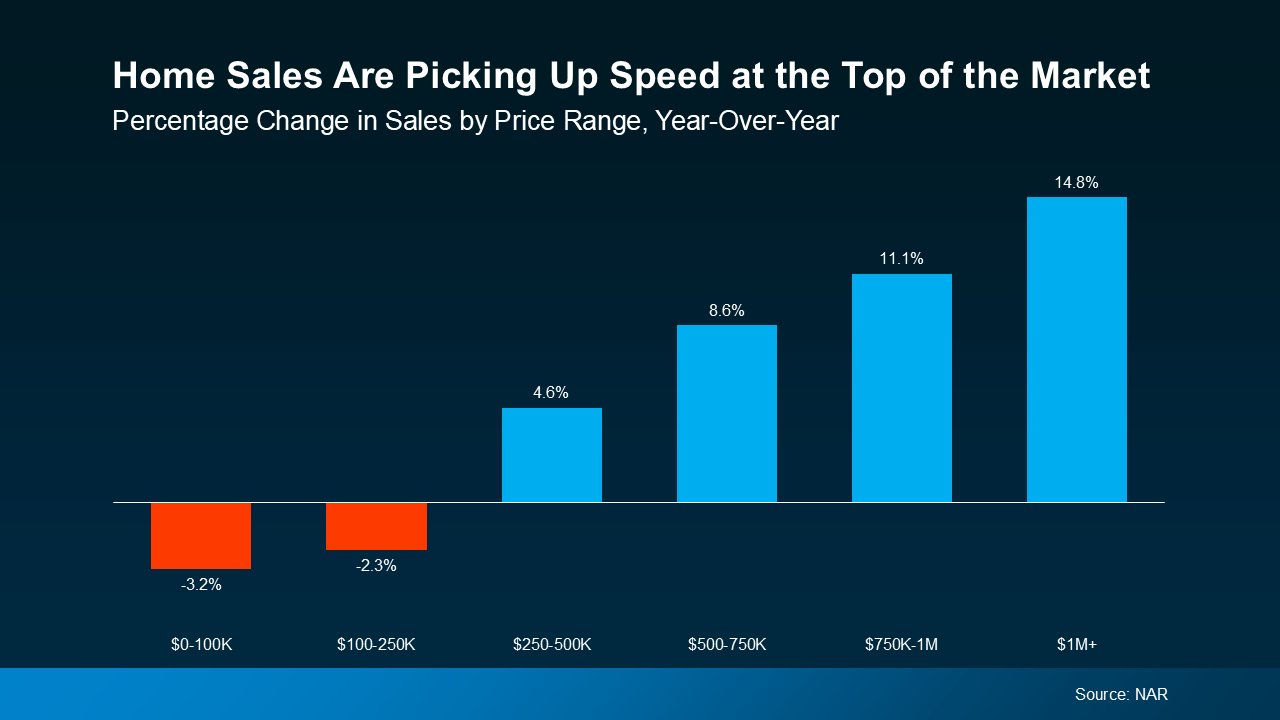
Rates and buyer competition are shaping this market differently depending on price point. Look at recent sales data from the National Association of Realtors (NAR) and the pattern jumps right out. 

Homes priced under $250,000 saw sales drop 2-3% compared to last year, while homes priced above $750,000 saw sales climb by double digits (see graph below):

a graph of salesWhat’s behind the divide? Due to higher rates and the last few years of home price appreciation, fewer buyers can comfortably afford homes at the entry-level price point right now – especially first-time buyers. So, demand in that segment has slowed down. 
On the flip side, buyers looking for higher-priced homes have less sensitivity to high-rate environments and more room in their budgets, thanks in part to a strong stock market and their equity in their current home. 

That’s the real differentiator. Lower-priced homes are still selling, just not as quickly since today’s rates have shrunk the pool of buyers who can afford to buy their first place right now.

This is exactly why pricing strategy and presentation carry more weight than they used to, especially if you’re selling in that range. Price it right from the start instead of testing a high number, make sure it shows well online and in person, and lean on an agent who can get your listing in front of every buyer shopping in your range. That’s the best way to make sure you catch the attention of one of the buyers who are still looking – and it’s how you prove your home is worth it’s price.

Why Some Homes Sit While Others Get Snapped Up

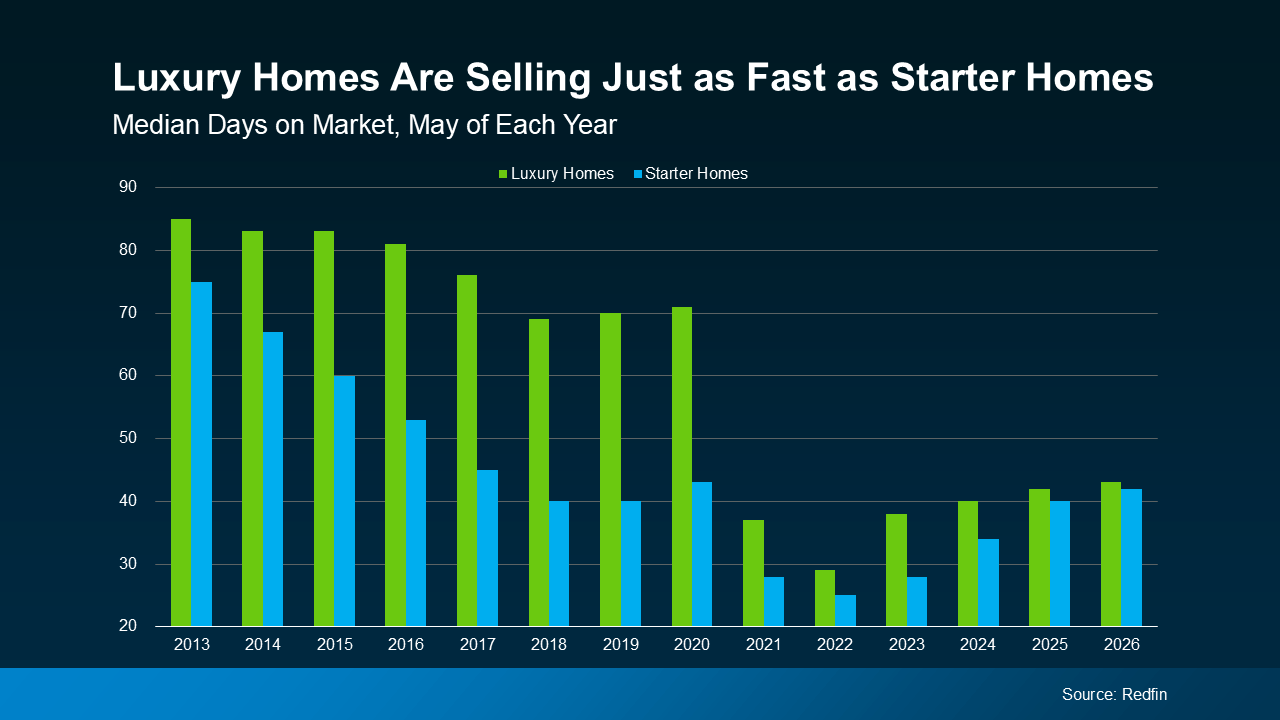
How fast a home sells is shifting by price point too, and the split is just as sharp. For years, luxury homes sat on the market a lot longer than starter homes. That gap has nearly closed, according to Redfin (see chart below):

a graph of salesBuyers with deep pockets are moving fast when a well-priced home in their range comes up. As Zillow puts it:

“The U.S. housing market is splitting in two. Luxury homes are selling at a faster pace than a year ago, with shrinking supply and growing bidding wars.”

If you’re in that range, your house may sell faster than you’d expect. You may even get multiple offers. That kind of competition changes how a listing should be marketed and priced from day 1. 

And no matter which side you’re on, that’s information you’re going to want up front if you want to have the smoothest sale possible.

What This Means for Your Sale

If you’re thinking about selling an entry-level home, don't panic. Homes at your price point are still selling, just at a slower pace than last year. That slower pace means pricing and presentation matter even more right now. 

If you're selling a move-up or luxury house, you’re in a good spot right now. Buyers looking in your price point usually aren’t as affected by today’s rates, so they’re more active, and good listings are drawing real competition.

Either way, your price point is the biggest factor in how fast your house sells and what it sells for.

Bottom Line

Your home's price point is the real story right now, more than anything you're hearing in national headlines. Let's map out exactly where your house fits in this split market and build a pricing strategy that gets you the speed and price you're after.


Charley Wasson is a full-time real estate professional specializing in the Boerne, Texas and Fair Oaks Ranch, Texas markets — helping buyers and sellers navigate Hill Country properties with the depth of knowledge that only comes from living and working in the community.

Named to the Platinum Top 50 of San Antonio Realtors, and a 4 time award winner, Charley brings nearly a decade of dedicated real estate experience and a track record that speaks for itself: over 300 documented MLS sales and more than $121 million in property sold across the Boerne, Fair Oaks Ranch, and greater Hill Country area. That volume of closed transactions isn't just a number — it means Charley Wasson has navigated virtually every scenario a Hill Country buyer or seller is likely to face.

Sept. 3, 2026

What Fall 2026 Actually Means for Boerne & Hill Country Home Sellers

If you've been holding off on listing because the headlines make the market sound slow, here's the more useful version of the story: homes are still selling — sometimes fast — but it takes the right price and the right prep to be one of them. I put together a full breakdown of what's actually happening in the market right now, and where sellers still have real leverage. Here's a preview.

More Inventory Means Buyers Are Choosier

Active listings are back near their highest point in five years. That's good news if you're also buying your next home, but it means your listing will have real competition. Buyers are quick to skip over anything that feels overpriced — and once you miss that first wave of attention, a later price cut rarely brings back the same momentum.

57 Days Isn't Slow — It's Normal

Homes are taking about 57 days to sell from list to close right now. That sounds slower than the pandemic-era frenzy, but it's actually right in line with 2018–2019, the last truly normal years in the market. Well-priced, well-presented homes are still going under contract in as little as a week.

Your Equity Might Be Bigger Than You Think

If you've owned your home for more than a few years, price appreciation and years of mortgage payments have likely built up more equity than you'd expect — for some homeowners, enough to cover a serious down payment or even buy the next home in cash.

Pricing Is Still the #1 Regret

The most common regret among sellers who skip working with an agent isn't the paperwork — it's the price. Homes sold with an agent have sold for meaningfully more than homes sold without one. Getting the number right from day one is what protects your bottom line.

Get the Full Guide

The full guide covers all of this in detail, plus a complete pre-listing checklist, how home equity could change your next move, and the biggest reasons sellers benefit from working with an agent in today's market. It's a quick read, and it'll leave you a lot more prepared than the headlines will.

Download the Free Fall 2026 Seller's Guide

Wondering what your home could sell for in today's market? Reach out — I'm happy to walk through the numbers with you.


Charley Wasson is a full-time REALTOR® with Sunflower Real Estate specializing in Boerne, Fair Oaks Ranch, and the greater Texas Hill Country — with over 300 documented MLS transactions and more than $121 million in closed sales, a four-time Platinum Top 50 San Antonio REALTOR® honor, and a career 98% customer satisfaction score.

Get Your Copy of the Guide

```

Sept. 3, 2026

What Fall 2026 Actually Means for Boerne & Hill Country Homebuyers

If you've been sitting on the sidelines waiting for mortgage rates to crash, I want to save you some time: that's probably not what's coming. But that doesn't mean this fall is a bad time to buy — it might actually be one of the better situations buyers have seen in years, just not for the reason most people expect.

I put together a full breakdown of what's happening in the market right now — rates, prices, inventory, and where buyers actually have leverage — and I'd rather you have the real numbers than the headlines. Here's a preview of what's inside.

Rates Are Holding Steady, Not Falling

Most forecasts have 30-year rates parked in the mid-6% range through at least mid-2027. That's not the dramatic drop a lot of buyers are hoping for, but it's also not a reason to keep waiting — especially with options like rate buydowns and assumable mortgages on the table.

Inventory Is the Real Story

Active listings have been climbing steadily since the ultra-low pandemic years, and more homes on the market means more room to negotiate. That shift is showing up directly in seller behavior — concessions and price cuts are near record highs for this time of year, and builders are right there with them, offering incentives on roughly 2 out of every 3 new homes.

The Listings Everyone Scrolls Past Might Be Your Best Opportunity

Homes that have been sitting on the market for a while aren't automatically flawed — sometimes it's just pricing, photos, or timing. Those are often exactly the listings where sellers are most motivated to make a deal.

Get the Full Guide

The full guide walks through all of this in detail, plus the two mistakes costing buyers the most right now, what to avoid once you've applied for a mortgage, and how to decide between an existing home and new construction. It's a quick read, and it'll leave you a lot more prepared than the headlines will.

Download the Free Fall 2026 Buyer's Guide

Have questions about what any of this means for your specific search in Boerne, Fair Oaks Ranch, or the greater Hill Country? Reach out — I'm happy to walk through it with you.


Charley Wasson is a full-time REALTOR® with Sunflower Real Estate specializing in Boerne, Fair Oaks Ranch, and the greater Texas Hill Country — with over 300 documented MLS transactions and more than $121 million in closed sales, a four-time Platinum Top 50 San Antonio REALTOR® honor, and a career 98% customer satisfaction score.

Get Your Copy of the Guide

```

Aug. 31, 2026

Boerne Sellers Are Cutting Prices To Meet Buyers Where They're At


You're scrolling through listings in Boerne or Fair Oaks Ranch Texas on your phone and everything looks good until you see the price (or the estimated monthly payment). Then you close the app. 

Because even if you love the house, the numbers feel impossible. But here's the thing.

Nationally, there are more homes sitting on the market than there are people out there looking. And when sellers need buyers more than buyers need sellers, that shows up in the price.

Lower asking prices. More price cuts. And homes priced for what buyers can actually afford – not what sellers hope someone might pay.

And it may be enough to make buying more doable than you’d think. 

4 Out of 10 Sellers Are Cutting Their Price 

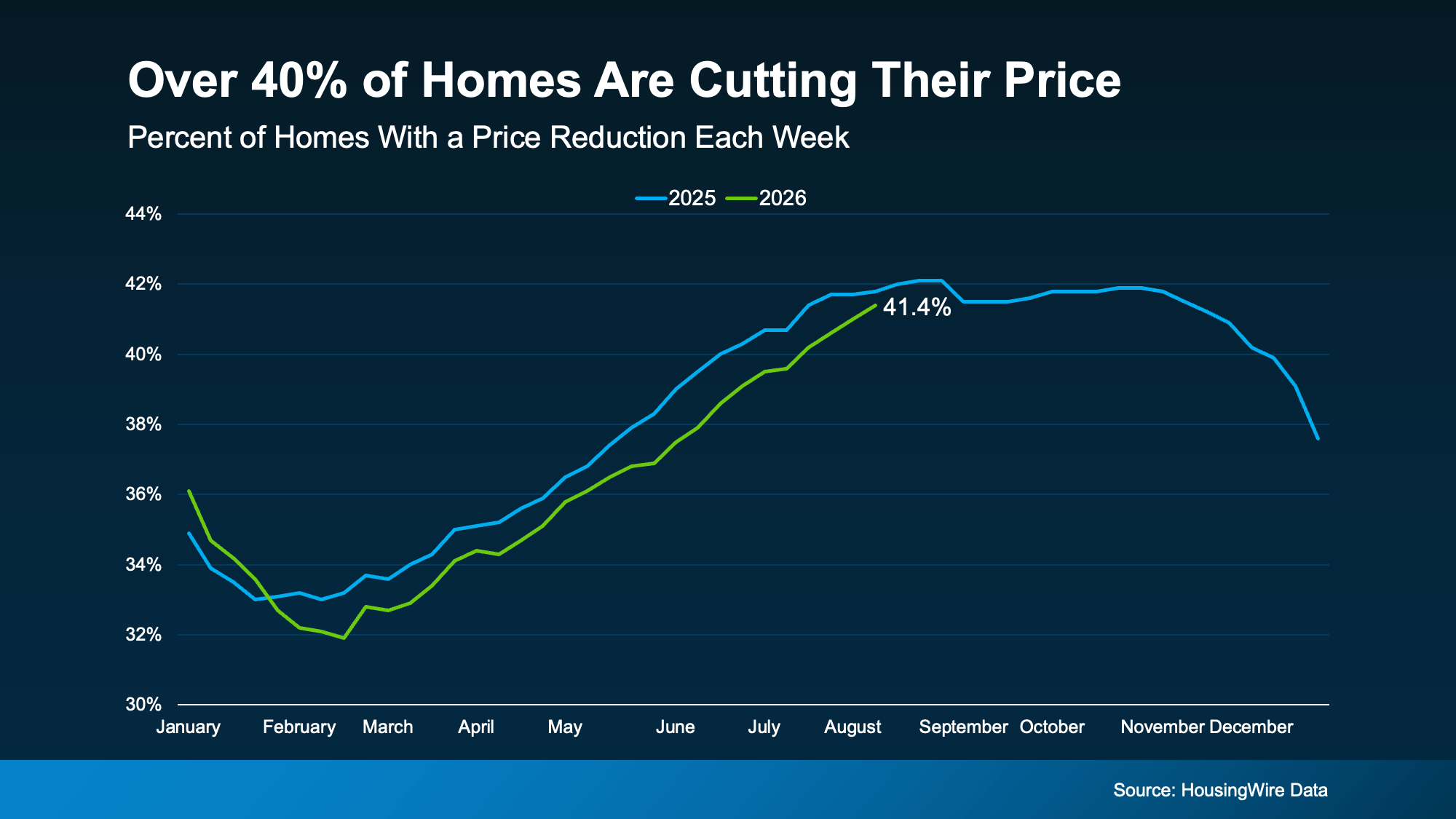
One of the clearest signs sellers are adjusting? Price cuts. HousingWire Data shows more than 40% of sellers are dropping this price.

That’s just slightly behind the volume we saw last year (see graph below):

a graph of a price reduction

That’s more than 4 out of every 10 homes listed. Think about what that means. That's thousands of sellers deciding they'd rather lower their asking price than keep waiting for someone willing to stretch their budget. 

They know that to sell, they have to be willing to do some give and take. And when no buyers are biting, they’re pulling their biggest lever to draw buyers back in – their price. As Danielle Hale, Chief Economist at Realtor.com, explains:

"This is a market where people are adjusting and showing up rather than giving up. Sellers are meeting the market with more realistic asking prices, which is helping deals get done."

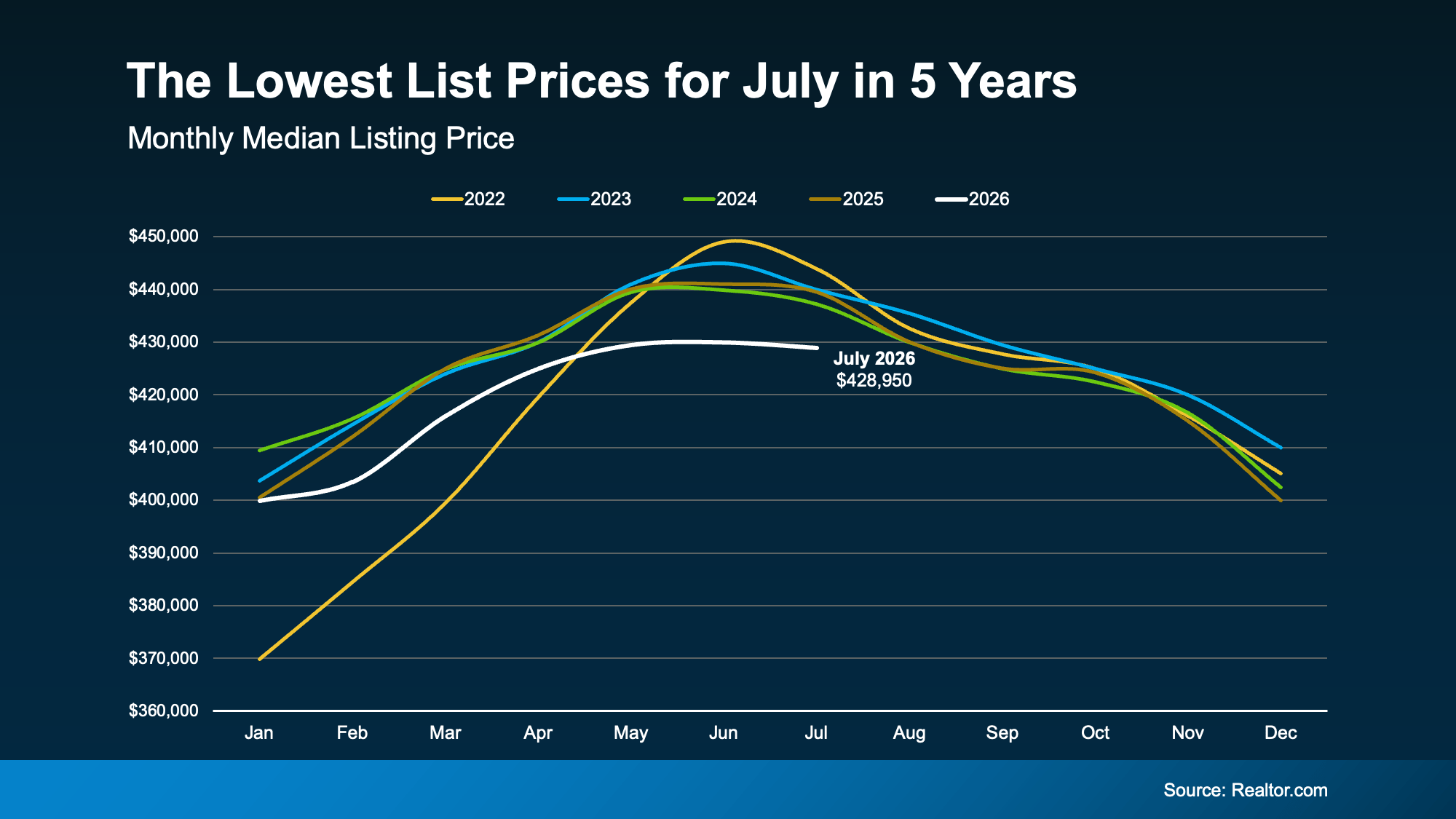
This July Saw the Lowest Median List Price for Any July in Five Years

What about the other 6 in 10 sellers? A lot of them started with a lower asking price to begin with rather than test the higher price and get crickets from buyers.

That may be why July 2026 had the lowest median list price of any July in the past five years, according to Realtor.com (see the white line in the graph below):

a graph of sales and prices

Now, that doesn't mean home values in Boerne or Fair Oaks Ranch are falling or that everything's suddenly a steal. Prices are still above where they were before the pandemic. But what it does mean is this.

Sellers no longer banking on bidding wars or expecting buyers to pay whatever they ask. Instead, many are listing at prices that better reflect today's market from the very beginning. 

And honestly, whether they're pricing competitively from day one or adjusting after a few weeks on the market, the message for you is the same:

Sellers in Boerne are more willing to meet you where you’re at.

Because in many markets throughout the country, you're not fighting over a house anymore. Sellers are fighting over you. And that’s information you can use to get a better deal.

Yes, affordability can be a real challenge. And the monthly payment you take on definitely does matter. But if you've been assuming everything is out of budget, there may be more wiggle room than you think.

Bottom Line

Right now, sellers in Fair Oaks Ranch and Boerne are flexible on the price in ways they weren't before. Let’s take advantage of that flexibility.

You may be surprised by what's available – and how willing today's sellers are to work with buyers.

Aug. 31, 2026

Thinking About Tapping into Your 401(k) To Buy a Home in Boerne? Read This First.


Lately, headlines have floated an eye-catching idea about tapping into your 401(k) to cover a down payment on a home in Boerne or Fair Oaks Ranch. Maybe you've caught the buzz and wondered whether that money could get you into a home faster, especially with affordability as tough as it is. 

Here’s what you need to remember. Pulling from your retirement savings is a big decision, so take time to weigh all your options first and be sure to talk with a financial expert before you do anything.

Why Dipping into a 401(k) Can Be Tempting

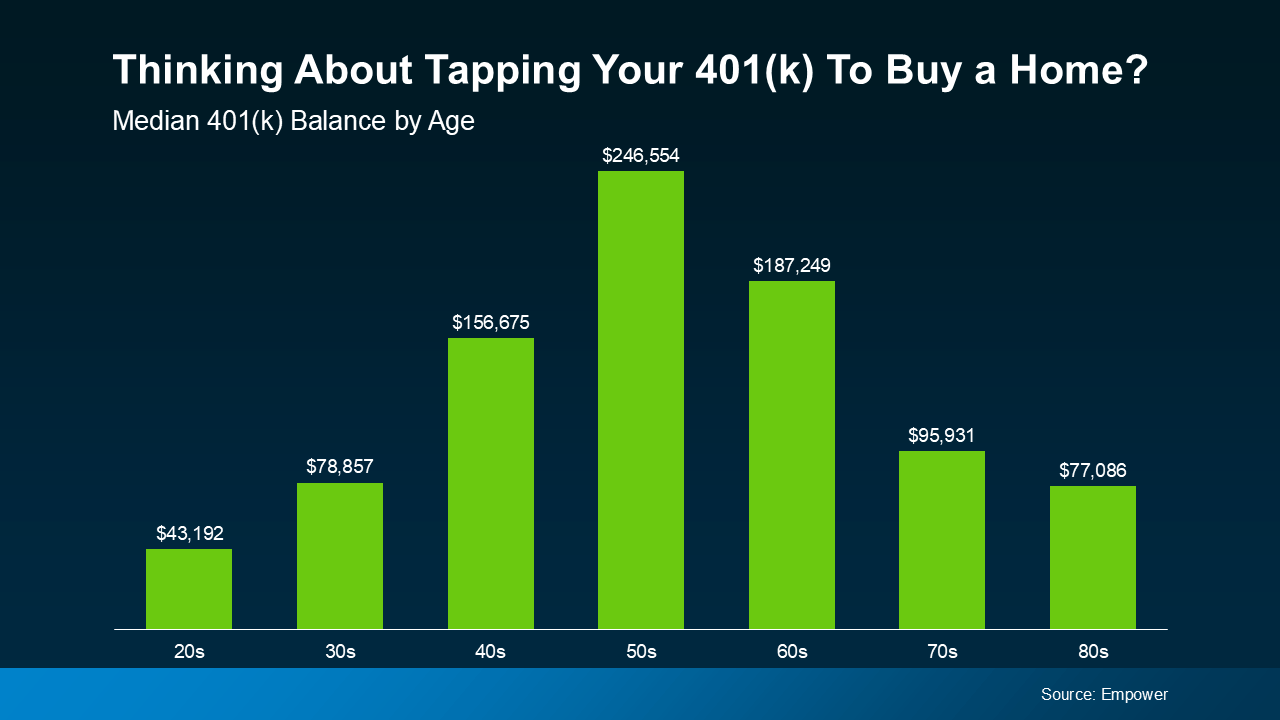
Data from Empower shows many Americans have built up considerable retirement savings. The median 401(k) amount for anyone in their 40s-60s is six figures (see graph below):

a graph of green barsAnd when you've got a good chunk saved and your dream home is right there, reaching for it can feel like an easy call.

But dipping into your retirement savings to buy a Boerne home could cost you a penalty and set back your finances later on. That's why it's a good idea to explore other options for your down payment first. As Redfin says: 

"If you’re struggling to save enough for a down payment, you may be wondering if tapping into your 401(k) is the right option. While it’s possible, doing so comes with significant risks, like early withdrawal penalties and lost investment growth."

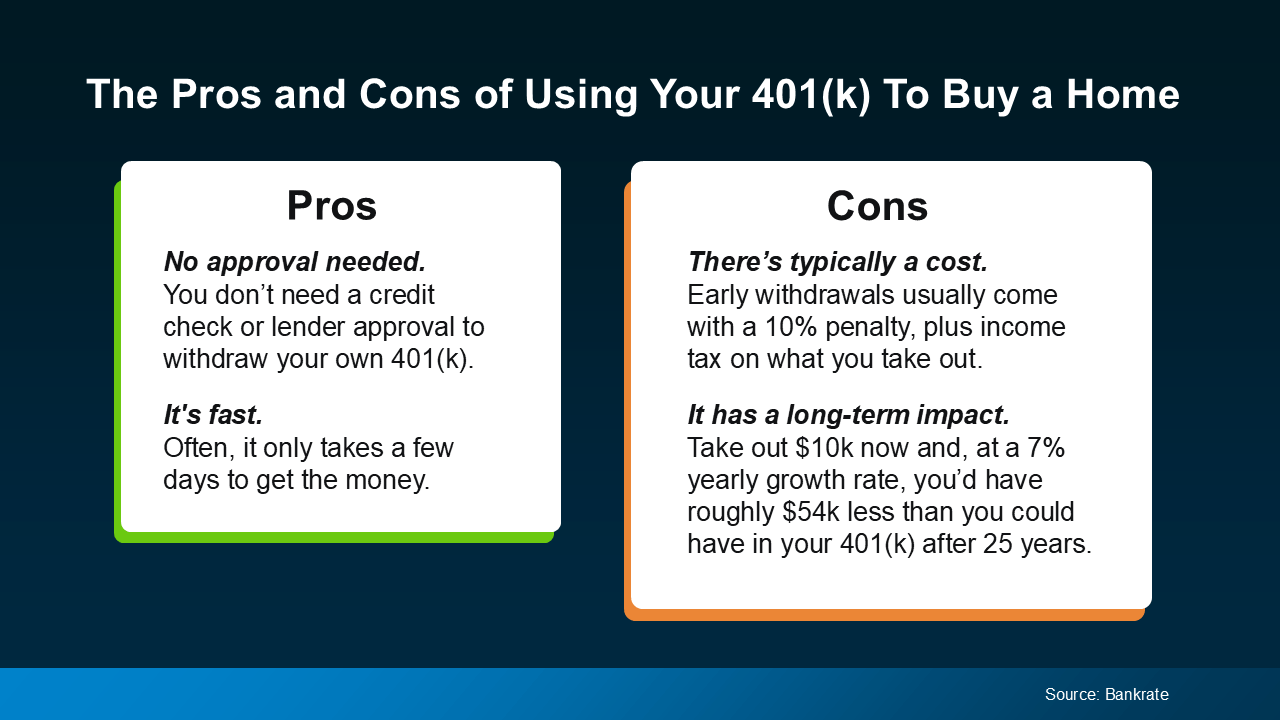
Before you decide, have a financial advisor help you compare the upsides to the risks. Bankrate points to a few of each (see visual):

a screenshot of a computer screen

Other Options Worth Exploring First

Your 401(k) isn’t the only way to finance a home purchase. Redfin outlines a few other options to look into before you decide what to do:

  • Low and No-Down Payment Loans: FHA loans, for example, allow qualified buyers to put down as little as 3.5% of the home's price, depending on their credit scores.

  • Down Payment Assistance Programs: Many national and local programs can help reduce what you pay toward your down payment or closing costs.

Make a Plan Before You Make a Move

No matter which route you take, talk with a financial expert first. The buyers who come out ahead build a solid plan with the right professionals before starting their journey to homeownership in Boerne or Fair Oaks Ranch Texas. As NerdWallet puts it:

"Even if you’re convinced a 401(k) loan is the way to go, it’s important to understand the risks at the outset."

Bottom Line

Affordability is definitely a challenge, but that doesn’t mean tapping your 401(k) is your only way in if you want to buy.

If you're considering using your 401(k) savings for a down payment, weigh all your options and talk with a trusted financial advisor before you make any decisions. They’ll help you make a plan to fit your goals and your budget. 


Aug. 17, 2026

The Kind of House Boerne and Fair Oaks Ranch Buyers Will Pay More For

\

That spare room on the main floor. The finished basement with a kitchenette and its own entrance. The bonus room you've been using for storage.

To you, it's extra space. But to a growing pool of buyers, it's the reason they'd pick your house. Here’s why. Multi-generational homebuying is on the rise.

Millions of Families Are Living Multi-Generationally

The number of multi-generational households is climbing. That’s when 3 or more generations live under one roof. And data shows those households grew from 3.2 million to almost 4 million between 2014 and 2024, according to Realtor.com.

And each year, more people are shopping for a larger home that fits their combined needs.

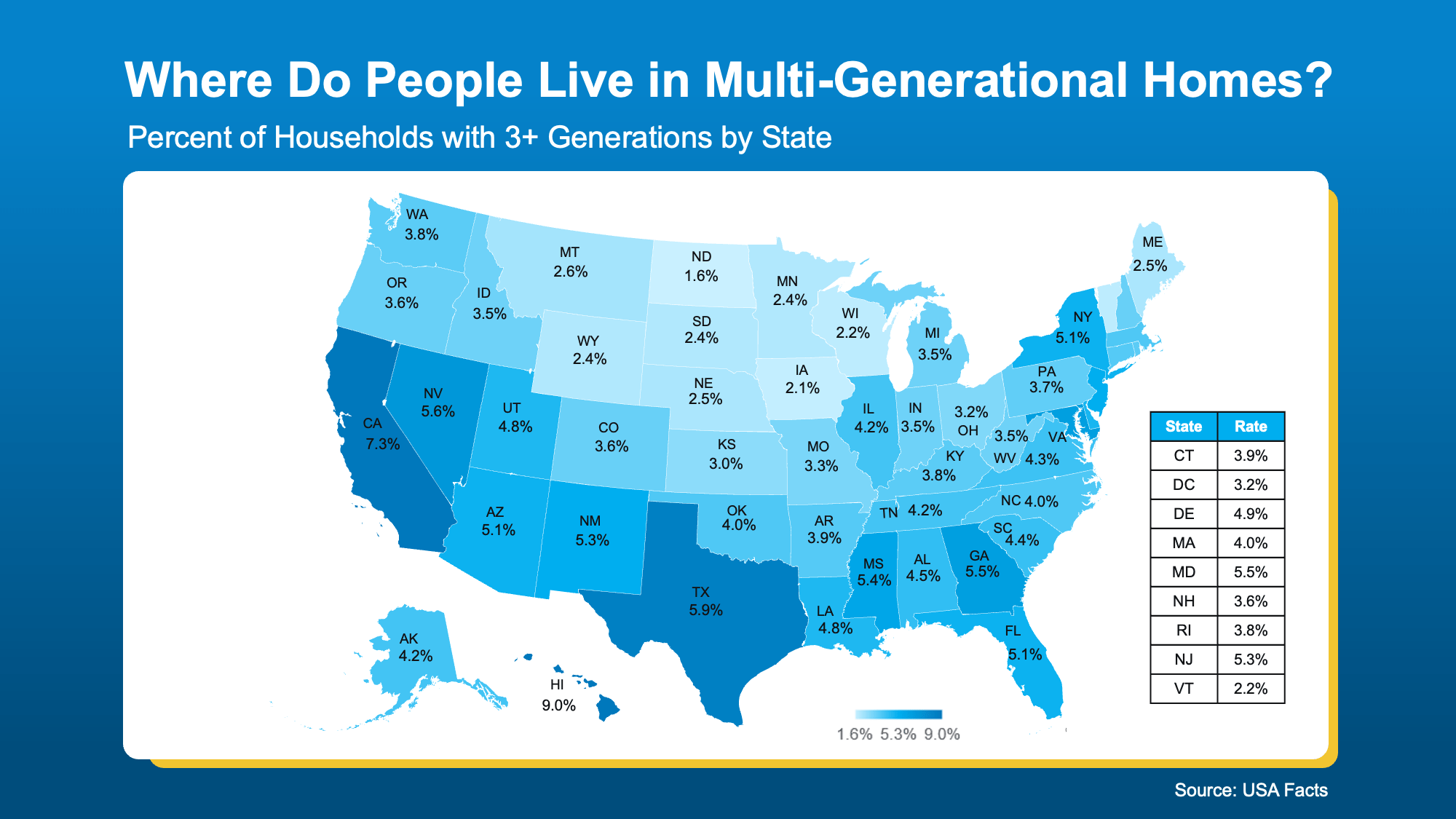
While the appetite for this type of house is rising across the board, data from USAFacts shows multi-generational living is more common in some states than others. The darker the state in the map below, the more common it is in that area (see map below):

a map of the united states

Where does your state fall? Depending on where you are, the pool of buyers looking for a house like yours could be even bigger than you’d think. But the overall bottom line is this.

There’s a real market out there for larger homes with room for multiple generations under one roof, especially since affordability is still so tight. And if you own a house like that, it’s in demand.

Multi-Generational Houses Sell at a Premium

And that extra room carries real value with the right buyer. According to Realtor.com, in 2025 the median asking price for a multi-generational house was $709,000 – roughly 65% higher than the $429,900 median for a standard house.

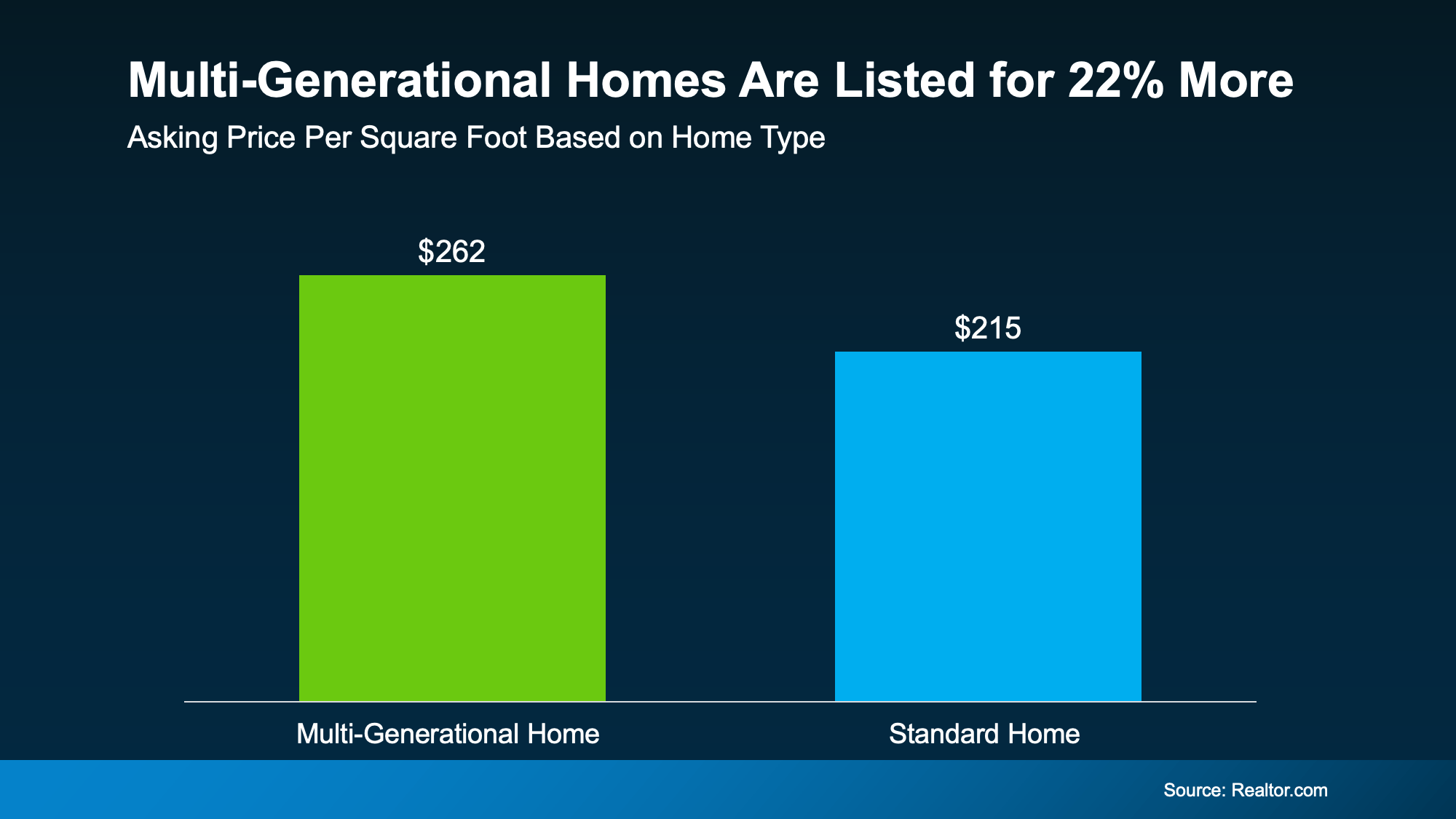
Some of that is simply size. But compare multi-generational homes to regular homes with the same amount of square footage, and they still come out on top – $262 per square foot versus $215.

That’s a 22% premium you could command for special features like in-law suites, second kitchens, and separate entries (see graph below):

a graph of a home sales

When you sell, this could help you walk away with more money in your pocket, especially when your agent highlights your home’s multi-generational-friendly features in your listing.

SEE HOMES IN THE BOERNE AREA THAT MAY OFFER MULTI-GEN OPPORTUNITIES AT THIS LINK.

And Buyers Aren’t Getting Sticker Shock

And even with slightly higher price tags, buyers aren't flinching. Multi-generational houses drew 13.5% more online views than standard ones, and they still sold just as fast – in about 59 days – per the same Realtor.com report.

Hannah Jones, Senior Economic Research Analyst at Realtor.com, explains:

"The strong demand and steep premiums we are seeing in inventory-constrained markets point to a real mismatch between what buyers are looking for and what is actually available. For sellers in these markets, this type of home can be a significant asset."

Basically, when buyers want something that's very specific, the house that checks the box tends to stand out.

SEE HOMES IN THE BOERNE AREA THAT MAY OFFER MULTI-GEN OPPORTUNITIES AT THIS LINK.

Bottom Line

Your multi-generational-friendly, or simply larger-than-average, house might meet criteria a lot of buyers can't find in a standard one. That's what gets attention. And offers. So, let’s chat about what it could get you in our market right now.